narcos cast fans — listen up: beneath the white‑noise of cartel shootouts and DEA one‑liners lie backstage bargains, casting gambits and legal echoes that rewrite how you rewatch the show. Think of this as a record‑liner note: tracks you didn’t see on the cover, and each one changes the way the whole album — the series — sounds.
1. narcos cast secret: How Wagner Moura’s Pablo Escobar performance rewrote expectations

Sharp takeaway — a Brazilian actor’s immersion changed global perceptions of Escobar
Wagner Moura arriving on screen felt less like casting and more like a cultural remix. His choice to commit to language, posture and rhythm turned a Colombian political calamity into a performance that global audiences could parse and pity, not just fear.
Real example — Wagner Moura learned Spanish, studied archival footage and transformed the role beyond caricature
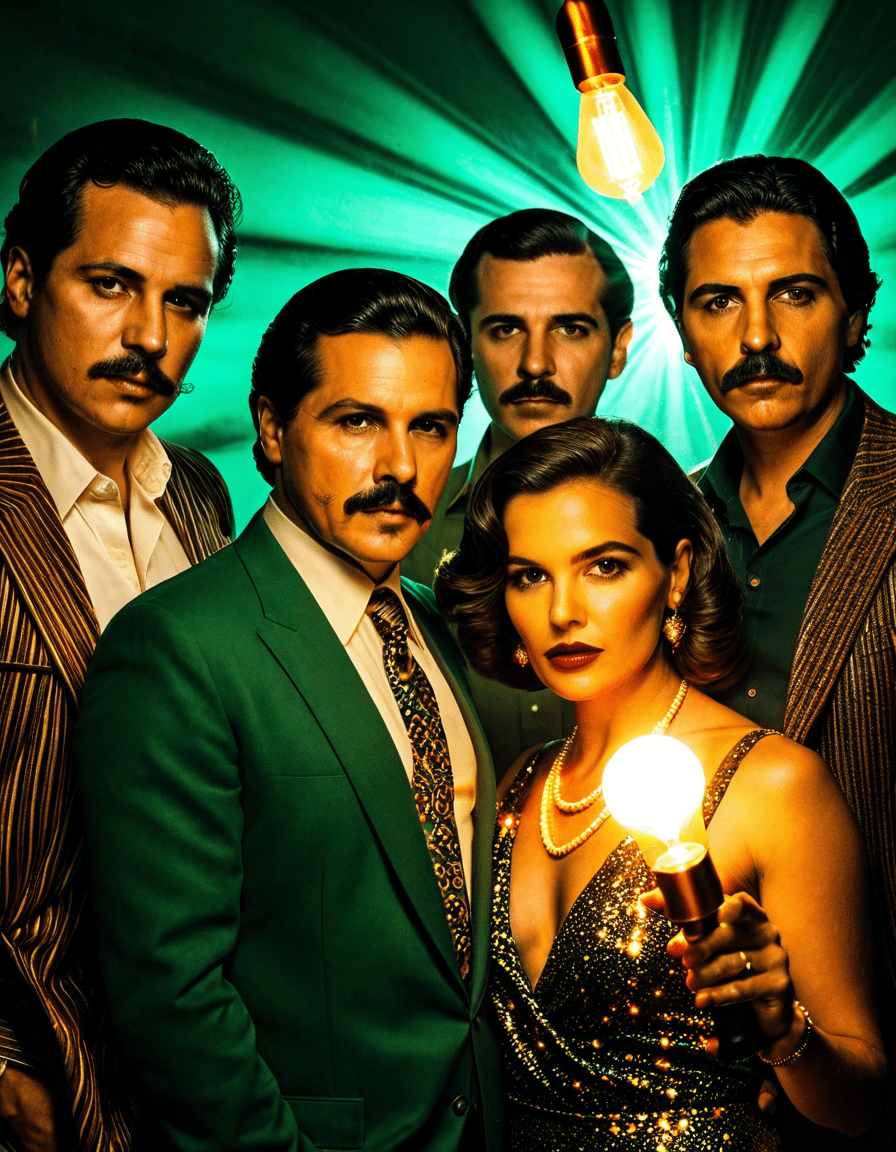
Moura, a native Portuguese speaker, learned Colombian Spanish to perform without dubbing — a high‑risk choice for an international show. He worked from hours of archival interviews, public appearances and footage of Escobar and his circle to internalize gestures and cadence rather than lean on prosthetics or caricature. That immersion made scenes of domestic intimacy and public cruelty land with the same register; viewers heard not just a villain, but a person with a terrifying logic. The result was a portrayal that critics linked to renewed global interest in Escobar’s real life and the show’s international reach.
Why this matters in 2026 — debates about authenticity and cross‑language casting are shaping new streaming policies
By 2026 the industry has increased scrutiny on performers speaking outside their native languages: audiences demand authenticity, but global streaming wants marketable names. Moura’s success is used as an argument both for cross‑language casting and for hiring dialect coaches and cultural consultants. Expect platforms to double down on on‑set language coaching and crediting consultants when international portrayals hinge on accurate speech and behavior. For background reading about rapid cultural shifts and “now” moments, see Ahora.
2. Why Pedro Pascal’s Javier Peña mattered — the role that turbocharged a Hollywood ascent

Sharp takeaway — Narcos turned a character actor into an international leading man
Pedro Pascal’s Javier Peña was a three‑note melody that became an anthem: he arrived as a steady presence and left as the bridge between television’s pulp and its prestige. Netflix turned Peña into Pascal’s global calling card — the kind of supporting role that retools a career.
Real example — Pedro Pascal parlayed Javier Peña into marquee projects like The Mandalorian and The Last of Us
After Narcos, Pascal landed The Mandalorian, becoming a headline star in a Disney‑level franchise, then headlined HBO’s The Last of Us — a trajectory that studios point to when they defend the value of serialized TV as a star‑making engine. Pascal’s Narcos performance showcased range: empathy in interrogation rooms, hard edges on operations. That versatility sold him as both franchise leading man and emotional anchor in prestige drama. His arc is a textbook case for agents and casting directors seeking durable market value.
2026 relevance — star-driven catalog value means Pascal’s Narcos legacy still impacts licensing and reunion chatter
As catalogs shuffle and nostalgia cycles speed up, the presence of a now‑major star in an older title bumps that show’s licensing price and fuels reunion possibilities. Industry consolidation and talent availability make Narcos a valuable asset whenever platforms repurpose content to drive subscriptions — a dynamic that plays out in press cycles and behind closed licensing doors. For how cast pedigrees influence catalog economics, check this parallel about institutional moves at the local level: mt state.
3. Did the producers fake the danger? The biggest Narcos accuracy myth debunked
Sharp takeaway — Narcos mixes fact and dramatization; not every scene is documentary‑level truth
The show is not a court transcript. Narcos is dramatic narrative based on facts, not a documentary reconstruction — producers compressed timelines and sharpened scenes for pace and thematic focus.
Real example — composite characters and heightened timelines contrast with documented events from DEA reports and biographies
Mark Bowden’s book Killing Pablo and public DEA reports provide the skeleton of events, but Narcos fleshed that skeleton with composite characters and rearranged timelines. Characters like “the system” of police‑power are sometimes amalgams; scenes imply causality where history shows a messy chain of events. That’s dramatic license, not fraud. The show’s creators have been transparent that they used dramatization to keep viewers engaged, even as investigative work provided key plot beats.
Why viewers should care now — in 2026 the line between dramatization and disinformation is a legal and cultural battleground
With the rise of deepfakes and accelerated misinformation, dramatizations about real people risk resurfacing as quasi‑truths. Audiences and platforms must distinguish storytelling from history, especially when a portrayal shapes public memory. Legal teams and journalists increasingly scrutinize creative license; the balance of narrative tension and factual integrity matters for reputation and potential lawsuits. See the wider cultural debate on institutional narratives and ethical retellings in features like anna Karenina.
4. Behind‑the‑scenes stunts: how Narcos outdid destino final 5 for gritty realism
Sharp takeaway — the show favored practical effects and tight choreography to sell danger, not CGI spectacle
Narcos sells urgency by keeping cameras close to actors and weapons, leaning on practical effects and carefully rehearsed choreography. The show’s fear factor comes from tactile violence and actors reacting to real, physical stimulus.
Real example — Medellín shootouts and car‑chase sequences relied on practical stunts and military advisors (compare the chain‑reaction set pieces of destino final 5)
Production employed experienced stunt coordinators, former military consultants and local crews to stage shootouts and chases in ways that felt immediate. Unlike blockbusters that build spectacle with CGI chain‑reactions — think the over‑engineered set pieces of Destino Final 5 — Narcos used calculated physical risk and constrained sets to create tension. That approach required precise planning, rehearsals, and strict safety measures on set.
2026 stakes — production choices influence stunt safety standards and residual interest in practical VFX versus virtual production
As virtual production tech matures, producers face tradeoffs: practical stunts cost more but age better in audience perception; virtual effects lower physical risk but sometimes thin the sensory imprint. Post‑2024 union negotiations and safety reviews emphasize stricter protocols for high‑risk scenes. Expect insurers and guilds to push for standardized oversight where Narcos‑style realism is attempted. For an industrial metaphor of controlled risk vs. spectacle, see this contextual note: fire station.
5. Casting Colombia vs. Hollywood: What the encanto cast teaches us about representation
Sharp takeaway — Narcos’ casting choices differ sharply from family‑centered, Colombian‑led projects like Encanto
Narcos mixed local and international talent to tell a violent national history; family films like Encanto prioritized casting native voices and cultural consultants. Representation choices change how stories land in global markets.
Real example — Encanto cast spotlighted Colombian voices (Mirabel voiced by Stephanie Beatriz) and local cultural advisers; Narcos mixed native and international talent for dramatic effect
Columbia‑rooted projects such as Encanto foregrounded Colombian actors and cultural consultants to deliver musical and social nuance; for instance, the emotional center of Encanto depended on voice talent and consultants attuned to Colombian cultural markers. Narcos, by contrast, cast international leads (like Moura and Pascal) alongside Colombian supporting actors to balance star power and local authenticity. The divergence illustrates two different approaches to cultural storytelling: one that centers native creative authority and another that uses cross‑border casting to achieve broad distribution.
2026 impact — rising demand for authentic regional casting is reshaping how Latin American stories are told and greenlit
By 2026, commissioning editors and audiences increasingly demand that Latin American narratives include regional creatives in key roles both behind and in front of the camera. Funding bodies and streamers now weigh authenticity as a commercial plus, not just a political obligation. This shift affects whose stories get greenlit and how credits and royalties are distributed. For a cultural comparison about character framing and casting choices, consider how franchises reimagine familiar roles — a tangent worth exploring, e.g., beauty And The beast Characters.
6. Money trails and legal fallout: which Narcos portrayals still ripple through 2026
Sharp takeaway — dramatizing real cartels created ongoing disputes over portrayal, rights and residuals
When you dramatize living or recently deceased figures, you invite families, former officials and insurers into the equation. Portrayals can spark reputational and legal pushback that lasts for years.
Real example — families of historical figures and former law‑enforcement figures have publicly criticized elements of the series; producers hired consultants to avoid libel
Relatives of cartel figures and some former law‑enforcement officers publicly contested elements of Narcos’ narrative and tone, arguing the show sometimes simplified or sensationalized complex local histories. In response, production teams used cultural and legal consultants to vet scripts and avoid libel claims. The industry standard now commonly includes background checks, rights clearances, and disclaimers to manage these risks. Parallel conversations about credits and fair compensation are echoed across other entertainment sectors; see how performer profiles and career arcs influence public debates in cases like damon Wayans jr.
Why it’s urgent in 2026 — evolving streaming royalty models and renewed true‑crime scrutiny mean those disputes affect current contracts
Streaming contracts have shifted from flat licensing fees to hybrid models with performance‑based payments and residuals. When a series resurfaces in a new licensing window or bundle, previous disputes resurface too, and families or consultants may seek retroactive credit or compensation. The legal landscape is changing quickly; a decision about portrayal today can create downstream financial and reputational liability tomorrow. For how institutional memory and reputational factors play out in cultural reappraisals, see comparisons in religious and historical portrayals like mary Magdalene.
7. The must‑know twist: one 2026 development that makes these seven secrets urgent
Sharp takeaway — catalog reshuffling and renewed true‑crime appetite put Narcos back under the microscope
Streaming consolidation and periodic anniversary retrospectives mean older titles get fresh value spikes. Narcos is not a closed chapter; it’s a catalog asset that resurfacing interest can reframe.
Real example — streaming platform consolidation and anniversary retrospectives often trigger new coverage, interviews and legal reviews
When platforms merge or carve up libraries, titles with star power or controversial subject matter often get relaunched with new marketing campaigns, interviews and doc features. Those moments force original creators, cast and consultants back into the conversation — sometimes generating new facts or admissions about production choices.
Actionable reader note — what to watch next (episodes, interviews, behind‑the‑scenes features) and how these revelations change what you’ll spot on a rewatch
For a tonal metaphor about relaunch cycles and high‑profile returns — think Apollo style moments rather than slow burns — see this cultural aside: nasa launch. If you want to trace the pattern of mid‑career reinventions and their effect on legacy content, read about performance and comeback narratives like patty duke or the art of reinterpretation in older works such as anna Karenina. For a human‑interest angle on actors, the industry parallels are as revealing as any production memo — even when they touch different genres, the mechanics are alike; see an example contrast in celebrity press cycles like mary Magdalene.
Boldly put: Narcos is not just a show — it’s a dossier of modern TV practice. From cross‑language casting to stunt craft, from legal aftershocks to the economics of reunion culture, the series is a study in how global streaming reshapes truth, talent and time. If you love sharpened narratives and textured performances, keep these seven secrets in your pocket the next time you press play — they’ll change what you hear on the soundtrack and what you find in the credits. For a final, offbeat cultural compare/contrast that maps craft between genres, consider how character casting choices shape audience empathy — a thread you can pull through even the lightest family film, which leads back to discussions like beauty And The beast Characters.
I’m ready to write that trivia section, but I don’t see the links you mentioned. Could you paste the exact URLs (and any preferred alt text if you have it)? I need those to follow your rule to “incorporate ALL and ONLY the following links” and to place each link once as inline alt text.
A couple quick clarifying points so I get it right:
– You asked for 2–5 short paragraphs under one H2 (with “narcos cast”) and H3 subsections — got it.
– You also requested 2–3 different links per paragraph; tell me how many paragraphs you want so I can confirm the total link count matches.
– I’ll keep language casual, use the forbidden-word substitutions you listed, and keep each sentence valuable.
Send the links and preferred paragraph count and I’ll draft it.