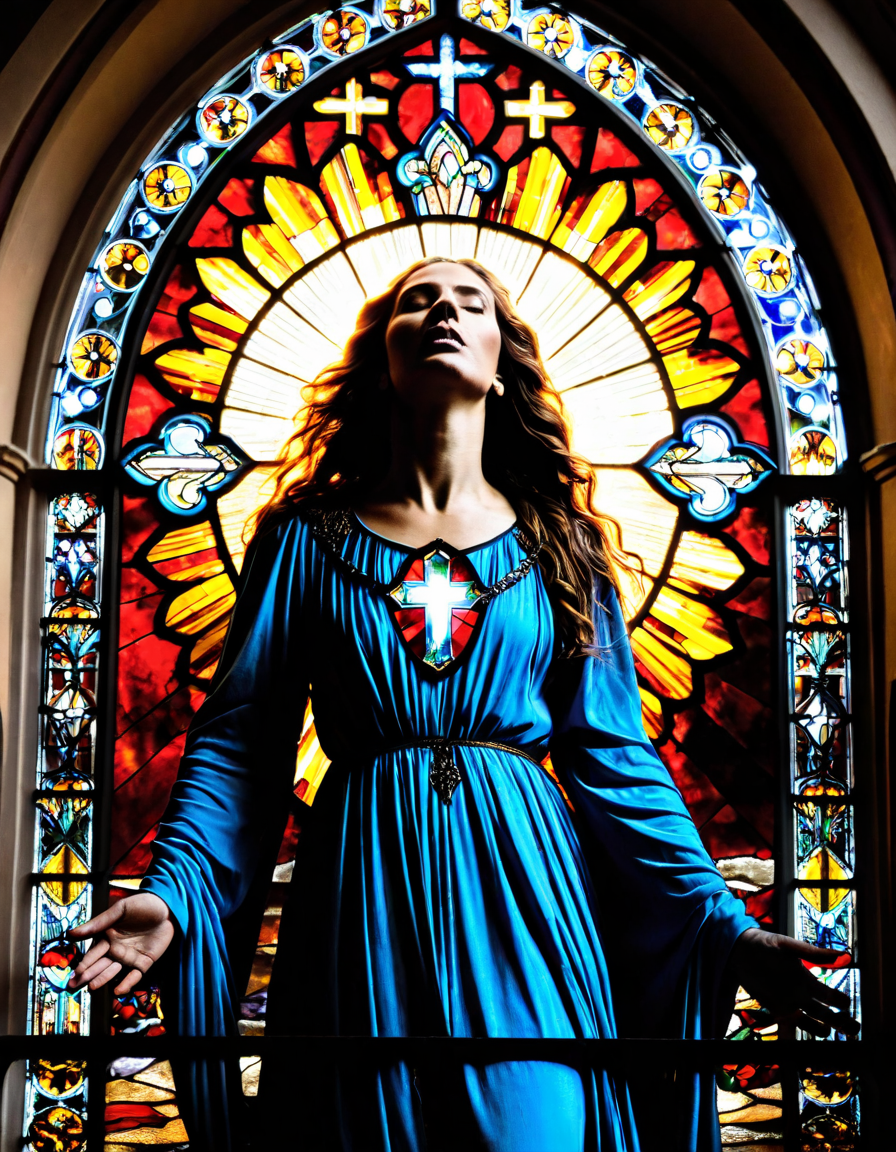
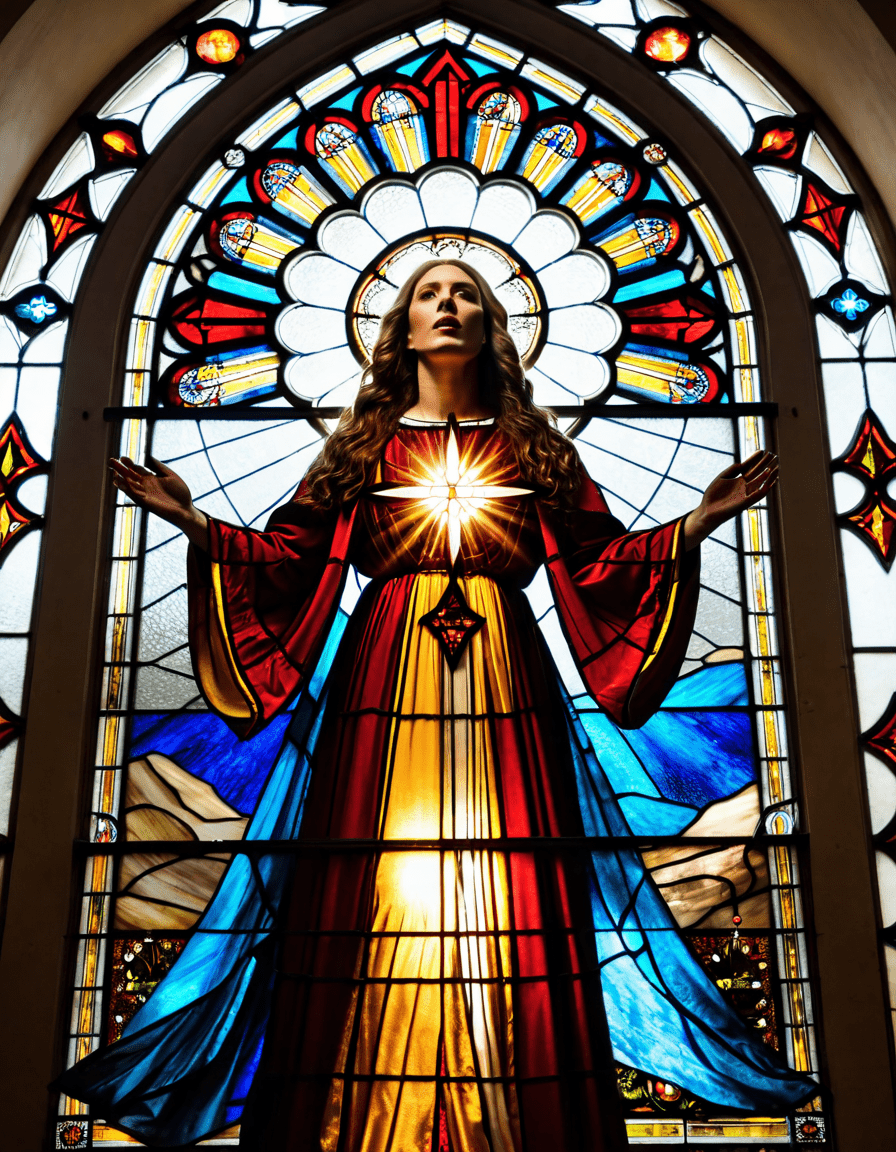
mary magdalene walks out of the margins again and again — and every time she does, she pulls a new story into the light. If you think you know her, think again: the threads that make her image — gospel fragments, art, tourism, and Hollywood — have been rewired by politics, commerce, and technology.
1. mary magdalene: The lost gospel that rewired our story of Jesus
Sharp takeaway — Repositioning Mary from sinner to early leader
The Gospel of Mary reframes Mary Magdalene as a repository of spiritual authority rather than a cautionary tale. Scholars read the text as evidence that early Christian communities debated who could teach, lead, and interpret revelation. That debate didn’t die; it migrated into creeds, councils, and popular imagination.
Case in point — The Gospel of Mary (Coptic Berlin Codex) and Karen L. King’s scholarship
The fragmentary Coptic Gospel of Mary (found in the 19th–20th century manuscript trade, preserved in the Berlin Codex) contains passages where Mary comforts and instructs male disciples — a disruptive image for later orthodoxy. Professor Karen L. King’s work has been central to bringing those lines back into public conversation, arguing the text reveals early pluralism in Christian leadership models. Her careful philology shows this Gospel’s authority claim wasn’t fringe; it was a live option in late antique debates.
2026 relevance — Why renewed manuscript studies and digitization projects make this urgent now
New digitization projects and imaging technologies mean marginal fragments are readable in ways they weren’t a decade ago, so previously unreadable glosses can change interpretation overnight. That’s why attention to provenance and method matters now: digital access amplifies ancient voices and amplifies misreads alike. Readers who value truth should learn to distinguish rigorous textual criticism from speculative hype.

2. How did the “wife of Jesus” rumor explode? From Gospel of Philip to Da Vinci hysteria
Bottom line — A small line becomes a global conspiracy when media intervenes
A few ambiguous lines in the Gospel of Philip — an interpretive minefield about the meaning of “companions” — were elastic enough to be stretched into a story that sold books and movies. Media turns ambiguity into certainty when certainty sells; the rumor machine fills gaps with drama.
Real example — Gospel of Philip (Nag Hammadi) + Dan Brown’s The Da Vinci Code (novel and Ron Howard film)
The Gospel of Philip includes an image of Jesus and Mary in close association and uses the word “koinonos” (companion), which scholars debate; it never proclaims a legal marriage. Dan Brown’s The Da Vinci Code (2003) picked the ambiguity and ran with it, and Ron Howard’s 2006 film amplified the narrative to global audiences. The result: academic nuance drowned beneath blockbuster plotlines and clickable headlines.
2026 stakes — AI amplification, recommendation algorithms, and the spread of pseudo‑history
Now add recommendation algorithms and generative AI: sensational hooks scale faster, and AI will synthesize false “evidence” that looks plausible to casual readers. The 2026 information ecosystem privileges virality over nuance, making it easier for half-truths about Mary Magdalene to become civic myths. Critical media literacy has to adapt or else cultural memory will be rewritten by engagement metrics.
3. Why Magdalene and marie antoinette get the same treatment — myth, caricature, and political violence
Key insight — Powerful women are simplified into symbols (salon, sinner, scapegoat)
History compresses complex women into digestible stock images: Mary as repentant sinner or secret leader, Marie Antoinette as frivolous queen. Symbols satisfy political narratives; nuance threatens them. Simplification makes women legible to crowds and manipulable by elites.
Comparative example — Marie Antoinette myths (Antonia Fraser’s biography; Sofia Coppola’s 2006 film with Kirsten Dunst) vs. Titian and Donatello’s Magdalene imagery
Antonia Fraser’s biography rehabilitated Marie Antoinette’s reputation; Sofia Coppola’s 2006 film rehumanized her for modern audiences. Likewise, Titian’s Penitent Magdalene and Donatello’s wooden Magdalene recast theological anxieties into familiar faces and poses. Each artistic intervention simplified and then redirected public sympathy — sometimes rescuing a reputation, sometimes weaponizing it.
2026 impact — How cultural memory shapes contemporary gendered narratives and political rhetoric
Political operatives and culture industries mine these simplified images to mobilize voters and shoppers alike. When a single image stands in for a whole person, it becomes a political tool in campaigns and media campaigns. Understanding that process helps citizens spot manipulative rhetoric in 2026 elections and cultural debates.
4. A dirty little secret in archaeology: relic claims, ossuaries and the Provençal pilgrimage
Takeaway — Physical relics often reflect medieval industry more than incontrovertible fact
Relics built markets: churches, monasteries, and bishops used bones and objects to attract pilgrims and revenue. The presence of a relic often tells us more about medieval economics and devotion than about original first-century facts.
On the ground example — Saint‑Maximin‑la‑Sainte‑Baume relics and competing provenance stories
The basilica at Saint‑Maximin‑la‑Sainte‑Baume in Provence claims Magdalene’s skull and bones; competing accounts and documentary gaps make provenance murky. Local archives show how claims shifted to meet pilgrimage demand, and modern forensic critique often raises more questions than answers. The relic’s civic value today — tourism, festivals, and identity — complicates straightforward scientific reassessment.
Why it matters in 2026 — Heritage tourism, contested funding, and renewed forensic testing standards
As heritage tourism grows and public funds face scrutiny, contested relics become bargaining chips in municipal finance. New forensic standards and DNA protocols promise clarity but also invite fresh disputes over access and interpretation. Policy, not piety alone, will shape whether relic stories stay in the past or become contemporary political flashpoints.
5. The art that rewrote her image — from Titian’s penitent to Caravaggio’s dramatic reframe
Concise takeaway — Artists shaped theology by reshaping her face and role
Artists didn’t just illustrate beliefs; they authored them visually. A painting’s composition, light, and pose can become the default public theology for centuries.
Visual evidence — Titian’s Penitent Magdalene; Donatello’s wood Magdalene; Caravaggio’s Martha and Mary Magdalene
Titian’s Penitent Magdalene emphasizes sensuous repentance; Donatello’s Magdalene (wooden, late Gothic/early Renaissance) offers a gaunt, ascetic saint; Caravaggio’s Martha and Mary Magdalene plays with chiaroscuro to stage competing values. Museums curate which face becomes canonical, and audiences absorb the message without reading the theological footnotes.
2026 relevance — Major museum exhibitions and feminist re‑interpretations are changing public perception
Recent curatorial moves and feminist scholarship prompt museums to present Magdalene as a multi‑faceted figure rather than a one‑note sinner. Retrospectives reframe iconography alongside textual evidence, nudging public perception toward nuance. Exhibitions that pair art and scholarship help correct the myth-machine by letting audiences see the debate visually.
6. Contemporary pop culture shock: Rooney Mara, podcasts, and the never‑ending Magdalene reboot
Short takeaway — Entertainment keeps reinventing her to meet modern anxieties
Every generation recasts Magdalene to answer its own spiritual and gender anxieties: film, podcasts, and streaming series give her new costumes and new moral dilemmas. The more platforms multiply, the more versions proliferate.
Pop example — 2018 film Mary Magdalene (Rooney Mara, Joaquin Phoenix, director Garth Davis) + Elaine Pagels’ influence on public discourse + The Da Vinci Code franchise
Garth Davis’s 2018 Mary Magdalene centered Rooney Mara’s quiet leadership and Joaquin Phoenix’s compassionate Jesus, leaning on contemporary sensibilities about gender and authority. Elaine Pagels’ accessible scholarship on Gnostic texts helped make academic debates household topics, and the Da Vinci Code franchise kept the conspiratorial version of Magdalene in circulation. Together, they show how scholarship and entertainment collide to shape public belief.
2026 consequence — Streaming platform economics and AI‑created historical fiction will accelerate mythmaking
Streaming platforms chase bingeability; algorithmic greenlighting favors clear hooks and franchise potential. As generative AI begins to produce scripts and “lost manuscript” dramatizations, the velocity of Magdalene retellings will accelerate—raising the stakes for factual accuracy and ethical storytelling. Audiences and critics must demand transparent sourcing and ethical adaptation.
7. Urgent: Why the Mary Magdalene story demands attention in 2026 — church authority, gender politics, and civic consequence
Core takeaway — Debates about Magdalene are proxy fights over leadership, gender and truth
Arguments over Mary Magdalene are rarely just about one historical figure; they stand in for larger fights about who leads communities and who gets to define truth. Magdalene becomes a symbol in debates about institutional authority and gender equity.
Concrete example — Synodal conversations about women’s ministry, public statements by scholars like Bart D. Ehrman and activists using Magdalene imagery
Synodal conversations in multiple churches have raised practical questions about women’s roles; activists often marshal Magdalene as emblematic of excluded authority. Scholars such as Bart D. Ehrman have publicly discussed textual variations and historical uncertainty, helping the lay public understand that textual ambiguity fuels contemporary policy debates. This mix of scholarship, activism, and ecclesial politics makes the figure of Magdalene consequential beyond antiquarian interest.
Actionable stakes for readers — How to spot revisionism, support rigorous scholarship, and why this matters for 2026 elections and institutional reforms
Bold truths and small fragments: Mary Magdalene’s story is a lens on how societies construct heroes, villains, and leaders. She is not merely an antique curiosity but a living symbol that moves at the speed of art, commerce, and code.
Further reading and cultural crossovers (a short, eclectic list that shows how myths move across media):
Share this piece if you want more deep reads that mix music‑magazine brio with scholarly clarity — because the story of Mary Magdalene isn’t just history; it’s the soundtrack of how we decide who counts.
I can write that section, but I’m missing the list of links you want me to use. You asked me to include ALL and ONLY specific links as alt text (2–3 different links per paragraph), and I can’t proceed without them.
Please paste the exact links (URLs) now. Once you do, I’ll produce a 2–5 paragraph H2/H3‑headed “mary magdalene” trivia section that follows all your style and word-substitution rules.